Author Archives: dyadmin

Cutter Suction Dredger vs. Jet Suction Dredger: Key Differences for Your Project

When investing in dredging equipment, selecting the right machine for your specific environment is the difference between a profitable operation and a costly mistake. For many international buyers, the choice often comes down to two primary types: the Cutter Suction Dredger (CSD) and the Jet Suction Dredger (JSD).

While both are hydraulic dredgers designed to move sediment through a pipeline, their mechanical approach to “loosening” the underwater material is fundamentally different. Here is everything you need to know to make an informed decision.

1. Working Principles: Mechanical Power vs. Water Pressure

The Cutter Suction Dredger (CSD)

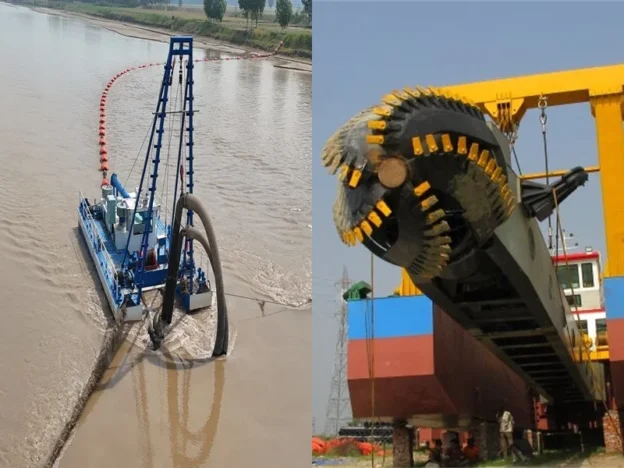
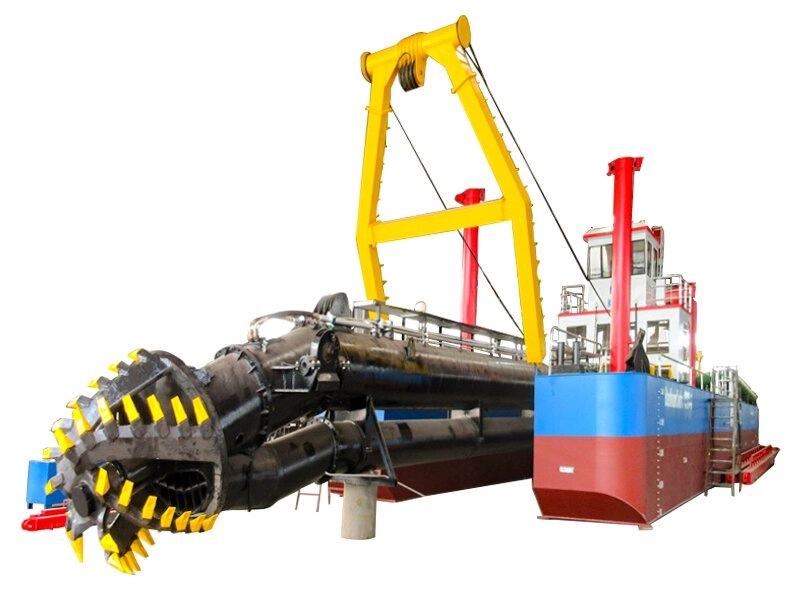
The defining feature of a CSD is the rotating cutter head located at the intake of the suction ladder. This head is equipped with high-strength alloy teeth that physically grind and break up the riverbed. Once the material is fragmented, a centrifugal pump sucks the slurry and transports it via a discharge pipeline to the shore or a barge.

The Jet Suction Dredger (JSD)

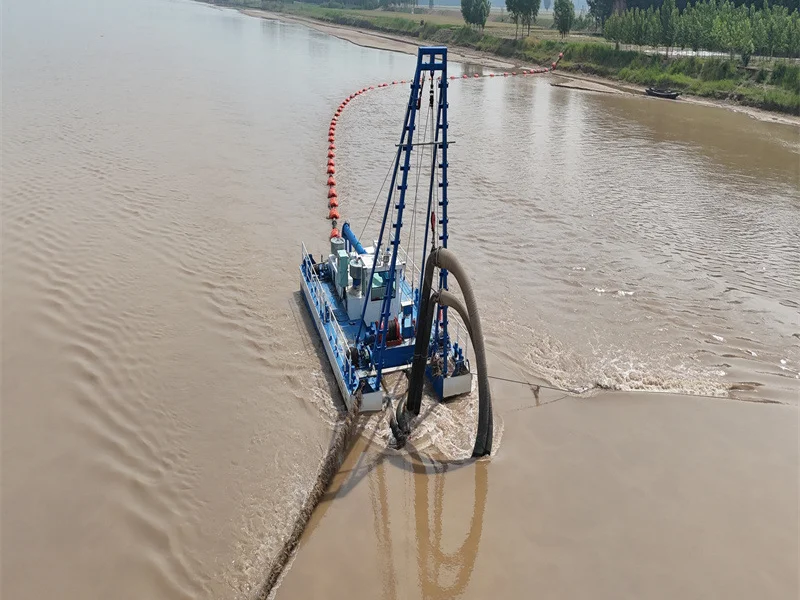
In contrast, a JSD uses no mechanical cutting tools. Instead, it utilizes high-pressure water jets to blast the underwater surface. This high-velocity water flow agitates the sand and silt, turning it into a suspension (slurry) that can then be sucked up by the pump. It relies entirely on fluid dynamics rather than physical force.

2. Soil Suitability: Hard Bed vs. Loose Sand

Understanding the geology of your dredging site is crucial:

  • Best for CSD: These machines are “all-rounders.” Because of the mechanical cutter head, they can handle hard clay, compacted gravel, and even soft rock layers. If your riverbed is tough or has been untouched for decades, a CSD is necessary.
  • Best for JSD: These are specialized tools. They are exceptionally effective in loose, free-flowing sand deposits. They are most commonly used in river sand mining projects where the material is already “soft” and only needs to be agitated to be pumped.

3. Operational Efficiency and Precision

Cutter Suction Dredgers are preferred for high-precision engineering projects. Because the cutter ladder is controlled by winches and spuds (large steel pillars that anchor the boat), the dredger can swing in a precise arc, ensuring an even depth across the entire channel. This makes them the industry standard for harbor deepening and land reclamation.

Jet Suction Dredgers are often simpler to operate but offer less precision in terms of the “cut” profile. However, for pure sand production where the goal is volume rather than a perfectly flat bottom, the JSD can be incredibly efficient and move large quantities of material in a short amount of time.

4. Cost of Investment and Maintenance

If budget is a primary concern, the Jet Suction Dredger generally has a lower initial purchase price. Its design is simpler, with fewer moving mechanical parts under the water, which also leads to lower routine maintenance costs.

The Cutter Suction Dredger is a more significant investment. The cutter drive system (hydraulic or electric) and the wear-and-tear on the cutter teeth require a more robust maintenance schedule. However, its ability to take on a wider variety of contracts often results in a higher Long-term Return on Investment (ROI).


Conclusion: Which Should You Choose?

  • Choose a Cutter Suction Dredger if you need a versatile machine that can handle hard soil, clay, and precise engineering requirements.
  • Choose a Jet Suction Dredger if you are focused strictly on sand mining in areas with loose, non-cohesive material and want a cost-effective, high-output solution.

As a professional dredging equipment manufacturer, we specialize in customizing both CSD and JSD models to meet the specific demands of your project.

Contact our engineering team today for a technical consultation and a customized quote for your next international project.


Jet Suction Dredger: Core Equipment for High Efficiency Hydraulic Dredging

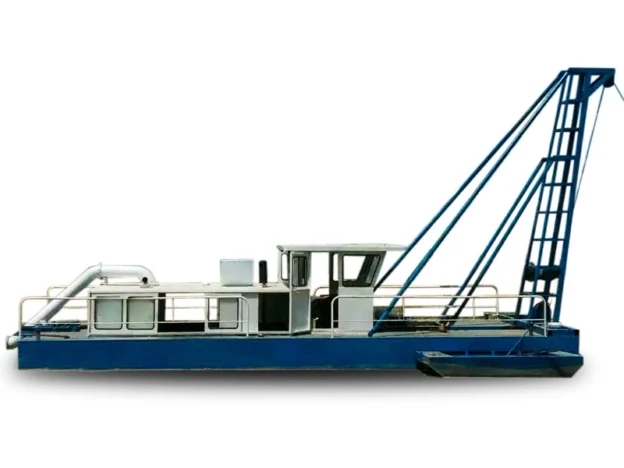
Jet Suction Dredger (also known as Jet Suction Sand Dredger) is a high-efficiency hydraulic dredging equipment relying on the synergy of high-pressure water flow and vacuum suction. It realizes the extraction and transportation of underwater sediments such as sand and mud through the integrated operation mode of “jetting-suction-conveying”, and is widely suitable for multi-scenario underwater dredging needs such as river regulation, port maintenance and reservoir desilting. With the advantages of no mechanical disturbance, high operation efficiency and wide adaptability, it has become one of the mainstream equipment for water area engineering dredging, and can effectively complete the desilting and dredging operation of medium and deep water areas and complex sediment which are difficult for conventional equipment to handle.

Core Parameter Specification

Model Type Length × Width × Height (m) Dredging Depth Range (m) Dredging Efficiency (m³/h) Total Power (kW) Conveying Distance (m) Adapted Pipe Diameter (mm)
Small (PSD Series) 4.5×2.0×0.7-6.8×2.0×1.0 6-20 25-110 22-100 50-200 100-250
Medium 8.0×2.2×1.5-11.8×2.2×1.5 15-20 130-390 100-500 1000-1500 250-400
Large (14-inch Customized) 16.0×4.2×1.5 ~25 ~375 897 Up to 1000 400

Large customized jet suction dredgers can be upgraded according to engineering requirements. The main pump power of some high-end models can reach up to 1750kW, and the maximum conveying distance exceeds 2000 meters, which can meet the high-intensity operation requirements of large-scale dredging projects such as port waterways and deep-sea reclamation.

Product Advantages & Technical Highlights

  1. Hydraulic Operation, Environmental Protection & Low Disturbance: The core adopts high-pressure water jet impact for soil breaking, without hard parts such as mechanical cutters and buckets touching the river bed, reducing physical disturbance to the underwater terrain. The operation process is low noise and dust-free, the mud conveying is highly sealed, suitable for dredging in ecologically sensitive water areas such as urban inland rivers and wetlands.
  2. High Efficiency Sludge Suction, Controllable Concentration: The linkage of high-pressure jet and vacuum suction can fully stir the underwater sediments to form high-concentration mud, with the sand suction concentration up to 60%, 20% higher than that of traditional cutter suction equipment. It can dynamically adjust the mud concentration (10%-35%), balancing operation efficiency and conveying stability.
  3. Wear Resistant & Durable, Longer Service Life: Easy-wear parts such as sand suction pipes, pump bodies and impellers are made of high-chromium alloy cast iron with a hardness of HRC58-62, and the service life is 3 times longer than that of ordinary steel. The impeller of the core pump body can withstand the passing of 300,000 cubic meters of solid materials without obvious wear during continuous operation.
  4. Modular Design, Flexible Adaptation: The equipment is disassembled into three core modules: power, sand suction and conveying, which can be freely combined according to the project scale. The single-pump single-pipe design of small models reduces the cost by 35%, and the double-pump parallel connection of large models achieves a breakthrough in processing capacity. It also supports customized modification to adapt to different sediment and dredging depth requirements.
  5. Intelligent Control, Convenient Operation & Maintenance: Integrating pressure sensors, flow monitoring devices and intelligent monitoring platform, it collects real-time operation data such as pumping pressure and mud discharge concentration. When the sand suction pipe is blocked, it can automatically backwash and resume operation in 30 seconds, and also support remote fault diagnosis and parameter optimization, greatly reducing the cost of manual operation and maintenance.
  6. Power Optimization, Energy Saving & High Efficiency: Adopting diesel/electric dual-power configuration (hybrid available for some models), the main pump power can be automatically adjusted according to the operation depth. The energy consumption is reduced by 22% compared with single-power equipment during 30-meter deep water operation. The double diesel engine parallel drive of large models increases the power by 60%, which can cope with the operation of high-hardness sand layers.

Applicable Scenarios & Materials

Applicable Scenarios

The jet suction dredger has a dredging depth of 1-30 meters, suitable for various dredging projects in still water and slow-flow water areas. The core application scenarios include: inland river desilting, port waterway maintenance, reservoir sediment control, coastal beach dredging, sea reclamation engineering, urban lake ecological restoration, mountain small reservoir desilting and cross-border deep water river dredging, etc. Small models can enter narrow rural rivers, and large models can meet the large-scale operation needs of deep-sea ports.

Applicable Materials

Relying on the crushing capacity of high-pressure jet and the adaptability of vacuum suction, it can handle most underwater loose and soft sediments. The core applicable materials include: river sludge, reservoir pond bottom sludge, sandy sediment, silty clay, fine sand, medium sand, sand-stone mixed sediment. Some composite models can handle sediment containing a small amount of loose gravel and small stones (diameter ≤30cm), adapting to multi-impurity underwater working conditions.


Guide to Mining Crusher Types: Jaw, Cone, Impact & VSI Crushers

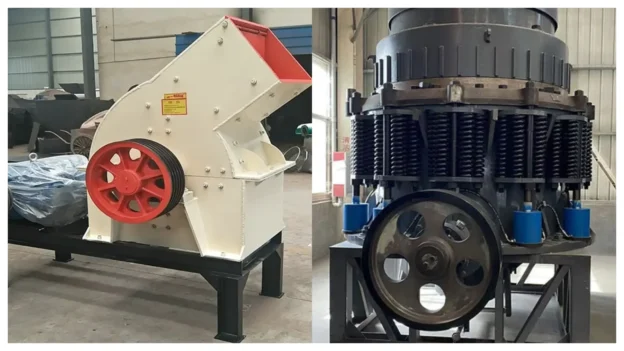
In the field of mining and industrial processing, crushers are indispensable core equipment. Based on working principles, material particle size, and structural characteristics, mining crushers are generally classified into the following main categories:

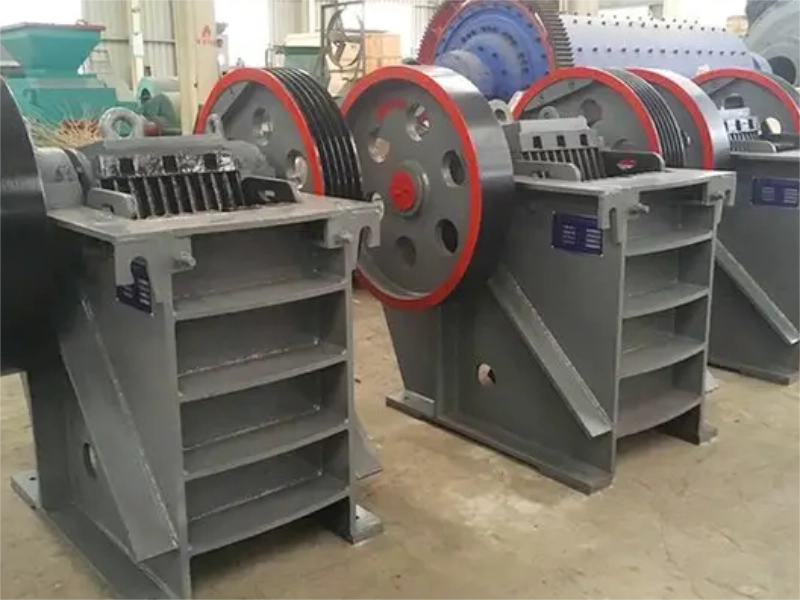
1. Primary Crushing: Jaw Crusher

This is the first stage of the mining process (Primary Crushing).

  • Working Principle: It crushes large rocks by the compression movement of a movable jaw plate and a fixed jaw plate, similar to “chewing.”
  • Features: Simple and robust structure, ideal for handling high-hardness materials and large-sized ores.
  • Application: Primary crushing of various hard rocks and ores.

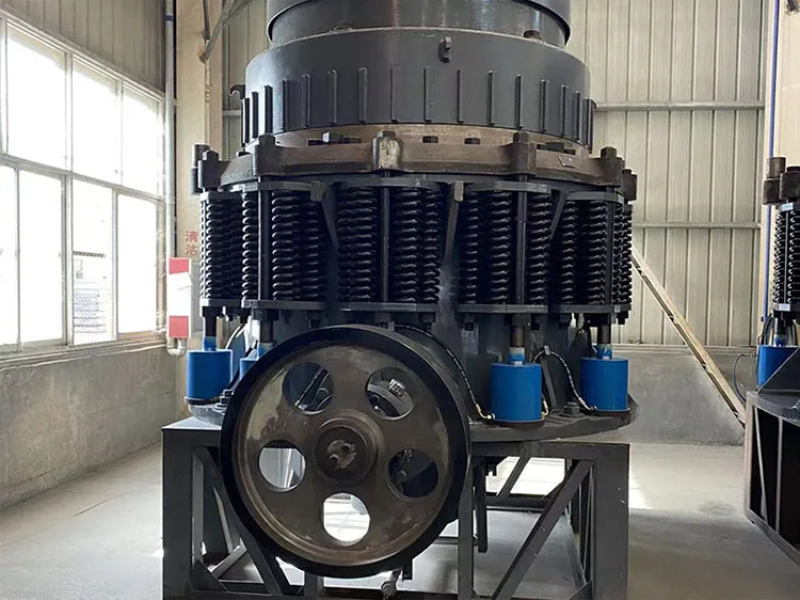
2. Secondary/Tertiary Crushing: Cone Crusher

Commonly used for the second or third crushing stages to process materials after primary crushing.

  • Working Principle: The crushing mantle moves within the bowl liner in a gyratory motion, squeezing and breaking the material between them.
  • Classification: Includes single-cylinder hydraulic, multi-cylinder hydraulic, and spring-type cone crushers.
  • Features: High efficiency, long service life of wear parts, suitable for medium-hard to extremely hard materials like granite and basalt.

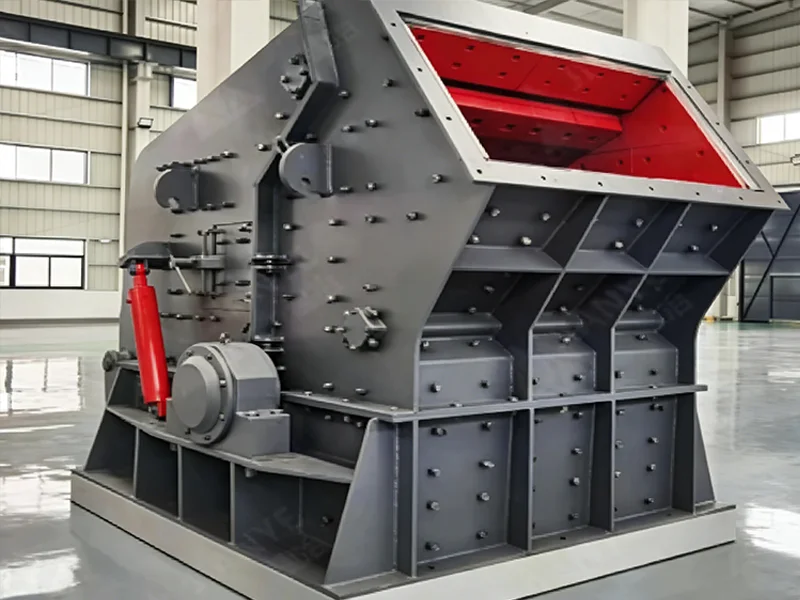
3. Secondary/Fine Crushing: Impact Crusher

  • Working Principle: It utilizes high-speed rotating blow bars to strike the ore and throw it against impact plates for further crushing.
  • Features: Excellent final product shape (mostly cubical) and adjustable discharge size.
  • Application: Suitable for medium-hardness, relatively brittle materials such as limestone and concrete recycling.

4. Sand Making & Shaping: VSI Crusher (Vertical Shaft Impactor)

Commonly known as a “Sand Maker.”

  • Working Principle: Uses “stone-on-stone” or “stone-on-metal” principles, causing materials to collide at high speeds.
  • Features: Primarily used for manufactured sand production and shaping construction aggregates with lower wear costs.

5. Special Purpose Crushers

  • Roll Crusher: Crushes through compression and friction between two counter-rotating rollers, often used for coal or chemical raw materials requiring strict size control.
  • Mobile Crushing Plant: These crushers are mounted on tire or crawler chassis, allowing them to move directly into the mining site, significantly reducing transportation costs.

Crusher Selection Reference Guide

Equipment Name Crushing Stage Material Hardness Key Advantages
Jaw Crusher Primary Hard / Extra Hard Large feed opening, easy maintenance
Cone Crusher Secondary / Tertiary Hard / Extra Hard Large capacity, high automation
Impact Crusher Secondary Medium / Soft Superior grain shape, high reduction ratio
VSI Crusher Fine / Shaping All Hardness High-standard sand production

Drum Ore Washer – Professional Mineral Washing Equipment

Product Overview

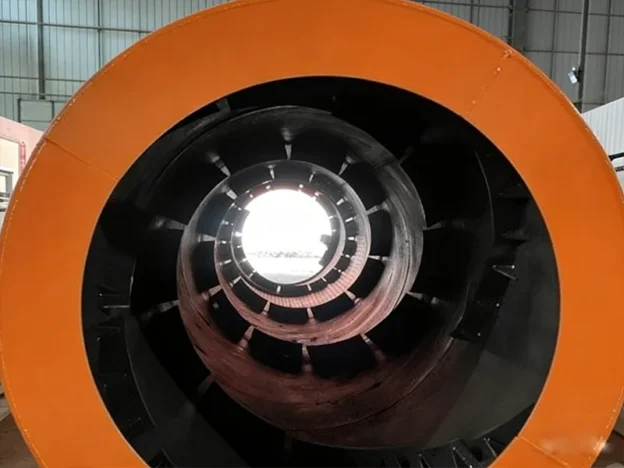
The Drum Ore Washer is a core pre-treatment equipment for coarse and medium-grained mineral washing based on hydraulic scrubbing and gravity classification principles. It adopts a single cylinder rotating structure, and drives materials to fully tumble and stir with water and self-generated pebbles through the slow rotation of the cylinder, to efficiently complete the three operations of mineral cleaning, de-sliming and classification. It is divided into three specifications: industrial small, industrial medium and industrial large. The equipment has the advantages of simple structure, stable operation, wear resistance, energy saving, intelligent control, strong adaptability, uniform cleaning, safety and environmental protection, with high ore washing efficiency and low energy consumption. It can process a variety of coarse and medium-grained muddy minerals, and is especially good at the washing pre-treatment of coarse and massive minerals. It is easy to operate and has low maintenance cost. It can not only complete the ore washing operation independently, but also form a complete mineral processing production line with crushing, grinding and sorting equipment. It is widely used in mining, metallurgy, building materials, environmental protection and other industries, which can effectively peel off the sediment and impurities on the mineral surface, improve the efficiency of subsequent operations, reduce resource waste and lower the comprehensive operation cost. It is the preferred basic equipment for the washing pre-treatment of coarse and medium-grained minerals.

Core Parameters & Specifications

Model Cylinder Size (D×L) mm Screen Aperture mm Feed Size mm Processing Capacity (t/h) Motor Power (kW) Cylinder Speed (r/min) Water Pressure (Mpa) Water Consumption (m³/t) Machine Weight (kg) Ore Washing Efficiency (%)
RXT-1030 (Small) 1000×3000 ≥5 ≤100 30-50 15 25-28 0.4-0.5 1.5-4 4800 ≥90
RXT-1230 (Small) 1200×3200 ≥5 ≤100 50-70 18.5 23-25 0.4-0.5 1.5-4 5800 ≥91
RXT-1545 (Medium) 1500×4500 ≥5 ≤150 70-120 30 18-22 0.4-0.5 1.5-4 6900 ≥92
RXT-1860 (Large) 1800×6000 ≥5 ≤170 100-140 45 20-21 0.4-0.5 1.5-4 12800 ≥93
RXT-2265 (Large) 2200×6500 ≥5 ≤230 160-180 55 19-20 0.4-0.5 1.5-4 16500 ≥93

Product Advantages & Technical Highlights

  • Strong drum scrubbing: Cylinder rolling scrubbing for excellent de-sliming and impurity removal effect
  • High cleaning degree: Clean clay, mud lumps and coated ore effectively
  • Integrated washing and screening: Complete cleaning, screening and de-sliming synchronously
  • Stable operation: Smooth rotation, low vibration and low failure rate
  • Wear resistant and durable: Thickened cylinder body with wear-resistant and impact-resistant liner
  • Wide applicability: Universal for ore, sand and gravel, mineral sand

Applicable Scenarios & Materials

Applicable Scenarios

  • Sand gold washing
  • Sand washing in sand and gravel yard
  • De-sliming of high mud content ore
  • Ore dressing plant pre-treatment
  • Tailing scrubbing

Applicable Materials

  • River sand, mountain sand, weathered sand
  • Sand gold, cobblestone, limestone
  • Clay ore, high mud content ore


Cylindrical Double Screw Ore Washer

Product Overview

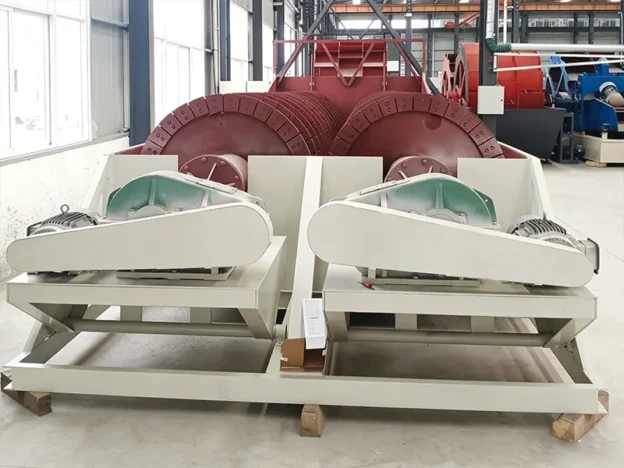
The cylindrical double screw ore washer is an efficient upgraded medium and large-sized washing and classifying equipment for coarse and medium-grained minerals based on the principles of gravity sedimentation and hydraulic classification. Its core adopts the design of “cylindrical water tank + double screw symmetrical layout”, which is different from the traditional trough type model. Through the synchronous reverse rotation of two screw blades, it drives the materials to roll and scrub 360° without dead angles in the cylinder, and synchronously completes multiple operations of desliming, classification, cleaning and dehydration. It is divided into four specifications: industrial small, industrial medium, industrial large and portable. The equipment has the advantages of firm structure, high-efficiency cylindrical scrubbing, stable dual-shaft synchronization, wear resistance and energy saving, intelligent controllability, strong adaptability, accurate classification, safety and environmental protection. Its processing efficiency and ore washing accuracy are better than the traditional trough type double screw ore washer. It can process a variety of coarse and medium-grained muddy minerals, especially suitable for difficult-to-wash ores with high mud content. It is easy to operate and low in maintenance cost. It can not only complete the ore washing and classification operation alone, but also be combined with crushing, grinding and sorting equipment to form a complete beneficiation production line. It is widely used in mining, metallurgy, building materials, environmental protection and other industries. It is an efficient upgraded preferred equipment for washing and classifying medium and large coarse and medium-grained minerals, which can effectively improve the efficiency of subsequent operations and the grade of finished products, reduce resource waste and lower the comprehensive operation cost.

Core Parameter Specification

Model Category Model Screw Diameter (mm) Cylindrical Sink Spec (D×L) mm Feeding Size (mm) Processing Capacity (t/h) Motor Power (kW) Screw Speed (r/min) Cylinder Inclination (°) Total Weight (kg) Ore Washing Efficiency (%)
Industrial Small YTSL-600 600×2 800×5200 2-30 30-70 12-16 13-22 6-10 3800 ≥93
Industrial Medium YTSL-1000 1000×2 1200×7200 5-45 80-160 24-32 10-17 7-11 9500 ≥94
Industrial Large YTSL-1500 1500×2 1800×10000 10-65 200-320 48-58 7-14 8-12 24000 ≥95
Portable YTSLY-1200 1200×2 1500×8500 8-50 110-220 39-48 9-15 7-11 30000 ≥94

Product Advantages & Technical Highlights

  • Cylindrical double screw: cylinder + double screw combination for more thorough cleaning
  • High cleaning degree: strong mud and impurity removal, high purity of mineral materials
  • Larger output: dual-shaft cooperative operation, greatly improved processing capacity
  • Stable operation: smooth running, low vibration and low failure rate
  • Wear resistance and durability: thickened wear-resistant blades for longer service life
  • Wide application: applicable for washing high mud ore, sand stone and ore agglomerate

Application Scenarios & Materials

Application Scenarios

  • Large-scale placer gold ore washing
  • High mud ore cleaning
  • Sand and gravel yard desliming
  • Front-end cleaning of beneficiation plant
  • Tailing desliming and purification

Applicable Materials

  • Placer gold ore, clay ore, cobblestone, limestone
  • Weathered rock, quartz sand, high mud ore


Drum + Screen Bar Composite Sand Washer

Product Overview

The Drum + Screen Bar Composite Sand Washer is a high-efficiency composite sand washing equipment that integrates the dual principles of drum rotation cleaning and screen bar classification screening. It adopts a core “drum + screen bar” integrated structure, which drives materials to collide and rub through low-speed drum rotation to achieve cleaning and desliming, and simultaneously uses screen bars to complete the classification of materials of different particle sizes, realizing three functions of cleaning, desliming and classification in one step. It is divided into three specifications: industrial small, industrial medium and industrial large. The equipment has the advantages of compact structure, stable operation, wear resistance, energy saving, intelligent control, strong adaptability, synchronous cleaning and classification, safety and environmental protection, with high sand washing efficiency and low energy consumption. It is good at processing difficult-to-wash sand, stone and ore with high mud content and high viscosity, and can process a variety of sand, stone and ore materials. It is easy to operate, with low maintenance cost, small floor area and low investment cost. It can not only independently complete sand washing and classification operations, but also be combined with crushing, grinding and sorting equipment to form a complete production line. It is widely used in mining, metallurgy, building materials, environmental protection, hydropower and other industries, which can effectively improve the material cleanliness and classification accuracy, reduce resource waste, lower the comprehensive operation cost, and is the preferred composite equipment for sand washing classification and ore desliming pretreatment.

Product Details

Model Drum Size (D×L) mm Liner Thickness mm Screen Bar Spacing mm Feeding Granularity mm Processing Capacity (t/h) Motor Power (kW) Drum Speed (r/min) Water Pressure (Mpa) Water Consumption (m³/t) Machine Weight (kg) Sand Washing Efficiency (%)
YTS-1030 (Small) 1000×3000 15-20 1-5 ≤50 30-70 30 22-26 0.3-0.5 1.0-3.2 10800 ≥95
YTS-1530 (Medium) 1500×3000 20-25 2-8 ≤80 70-140 55 20-24 0.3-0.5 1.0-3.2 17800 ≥96
YTS-1836 (Medium) 1800×3600 20-25 3-10 ≤100 120-200 75 16-20 0.3-0.5 1.0-3.2 24700 ≥97
YTS-2145 (Large) 2100×4500 25-30 5-12 ≤150 180-250 110 16-18 0.3-0.5 1.0-3.2 32618 ≥97
YTS-2450 (Large) 2400×5000 25-30 6-15 ≤200 230-300 160 15-17 0.3-0.5 1.0-3.2 48700 ≥98

Product Advantages & Technical Highlights

  • Composite Cleaning: Drum rolling + screen bar friction for more thorough cleaning
  • Integrated Washing & Screening: Synchronous completion of cleaning, screening and desliming
  • Large Processing Capacity: Continuous feeding, suitable for high mud content sand and stone
  • Not Easy to Block: Reasonable screen bar spacing for smooth discharge
  • Wear Resistant: Thickened cylinder and sturdy screen bar for long service life
  • Wide Application: Suitable for sand, stone, ore and mineral materials

Applicable Scenarios & Materials

Application Scenarios

  • Sand washing in sand yards
  • Ore desliming
  • River sand cleaning
  • Beneficiation plant pretreatment
  • Tailing cleaning

Applicable Materials

  • River sand, mountain sand, weathered sand
  • Cobblestone, limestone, quartz sand
  • Various muddy mineral materials