Cutter Suction Dredger vs. Jet Suction Dredger: Key Differences for Your Project
When investing in dredging equipment, selecting the right machine for your specific environment is the difference between a profitable operation and a costly mistake. For many international buyers, the choice often comes down to two primary types: the Cutter Suction Dredger (CSD) and the Jet Suction Dredger (JSD).
While both are hydraulic dredgers designed to move sediment through a pipeline, their mechanical approach to “loosening” the underwater material is fundamentally different. Here is everything you need to know to make an informed decision.
1. Working Principles: Mechanical Power vs. Water Pressure
The Cutter Suction Dredger (CSD)
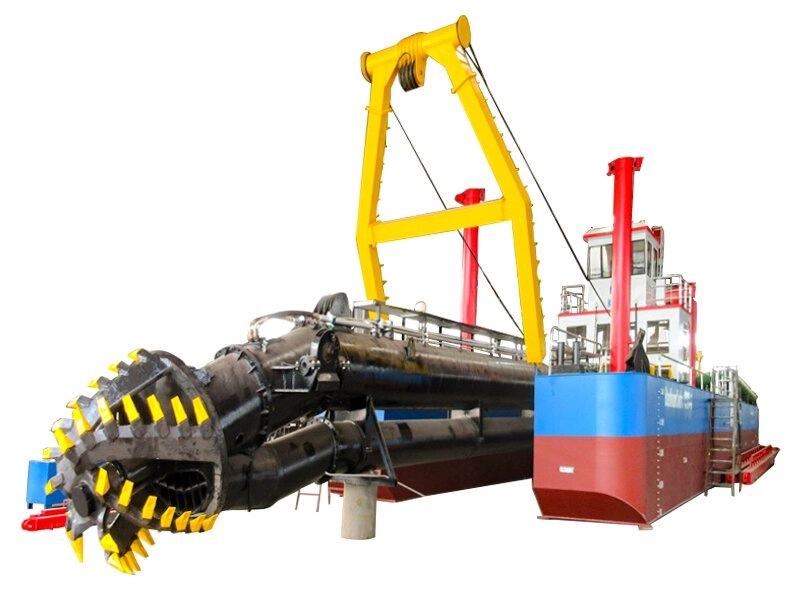
The defining feature of a CSD is the rotating cutter head located at the intake of the suction ladder. This head is equipped with high-strength alloy teeth that physically grind and break up the riverbed. Once the material is fragmented, a centrifugal pump sucks the slurry and transports it via a discharge pipeline to the shore or a barge.
The Jet Suction Dredger (JSD)
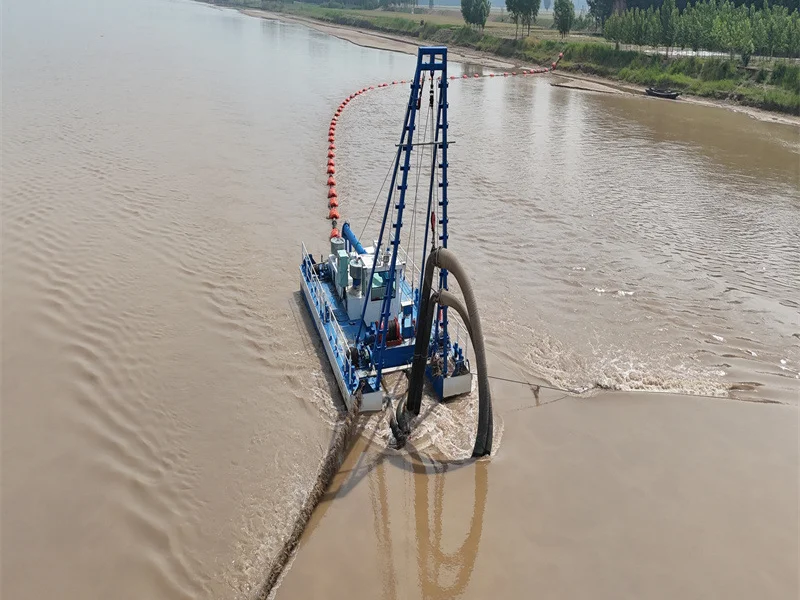
In contrast, a JSD uses no mechanical cutting tools. Instead, it utilizes high-pressure water jets to blast the underwater surface. This high-velocity water flow agitates the sand and silt, turning it into a suspension (slurry) that can then be sucked up by the pump. It relies entirely on fluid dynamics rather than physical force.
2. Soil Suitability: Hard Bed vs. Loose Sand
Understanding the geology of your dredging site is crucial:
- Best for CSD: These machines are “all-rounders.” Because of the mechanical cutter head, they can handle hard clay, compacted gravel, and even soft rock layers. If your riverbed is tough or has been untouched for decades, a CSD is necessary.
- Best for JSD: These are specialized tools. They are exceptionally effective in loose, free-flowing sand deposits. They are most commonly used in river sand mining projects where the material is already “soft” and only needs to be agitated to be pumped.
3. Operational Efficiency and Precision
Cutter Suction Dredgers are preferred for high-precision engineering projects. Because the cutter ladder is controlled by winches and spuds (large steel pillars that anchor the boat), the dredger can swing in a precise arc, ensuring an even depth across the entire channel. This makes them the industry standard for harbor deepening and land reclamation.
Jet Suction Dredgers are often simpler to operate but offer less precision in terms of the “cut” profile. However, for pure sand production where the goal is volume rather than a perfectly flat bottom, the JSD can be incredibly efficient and move large quantities of material in a short amount of time.
4. Cost of Investment and Maintenance
If budget is a primary concern, the Jet Suction Dredger generally has a lower initial purchase price. Its design is simpler, with fewer moving mechanical parts under the water, which also leads to lower routine maintenance costs.
The Cutter Suction Dredger is a more significant investment. The cutter drive system (hydraulic or electric) and the wear-and-tear on the cutter teeth require a more robust maintenance schedule. However, its ability to take on a wider variety of contracts often results in a higher Long-term Return on Investment (ROI).
Conclusion: Which Should You Choose?
- Choose a Cutter Suction Dredger if you need a versatile machine that can handle hard soil, clay, and precise engineering requirements.
- Choose a Jet Suction Dredger if you are focused strictly on sand mining in areas with loose, non-cohesive material and want a cost-effective, high-output solution.
As a professional dredging equipment manufacturer, we specialize in customizing both CSD and JSD models to meet the specific demands of your project.
Contact our engineering team today for a technical consultation and a customized quote for your next international project.
Message us for more information
Hot News
-
08/09/2026
10 Critical Vetting & Shipping Factors When Importing Heavy Mining Equipment from China
-
07/06/2026
Why Cheap Mining Equipment Costs You More in High-Yield Gold Mines
-
06/09/2026
Comprehensive Guide: What Is Coltan and How to Process It Efficiently?
-
05/25/2026
How to Optimize Gold Shaking Tables for Max Recovery
-
05/23/2026
The Ultimate Guide to Choosing the Right Sand Making Machine: VSI, Impact, Box, or Hydraulic Open-Box Crusher?