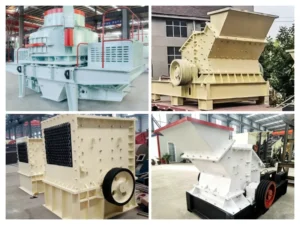
For mine owners and engineering contractors, sourcing heavy mining machinery (such as jaw crushers, cone crushers, and ball mills) or cutter suction dredgers from China is a high-reward yet complex strategic decision. Machinery completion at the factory is only the first milestone: a supplier’s practical mining experience, engineering detail control, maritime protection, and customs compliance directly determine whether your project starts up on schedule and achieves target output.
Buyers often encounter unexpected delays and costs by falling for low-price traps or choosing trading vendors who lack hands-on site experience. This guide outlines 10 critical operational factors for vetting Chinese machinery manufacturers, verifying technical details, and managing ocean transport.
I. Supplier Vetting & Site Experience (Avoiding the Low-Price Trap)
1. Tailored Engineering Capability vs. Blanket Agreements
In heavy machinery procurement, price should never be the sole evaluation factor. Ore hardness (e.g., granite vs. river gravel), moisture content, abrasiveness, and site altitude vary dramatically. There is no one-size-fits-all machine.
- Vetting Criteria: Professional manufacturers do not blindly promise that “everything is possible.” They actively request geological reports, Abrasion Index (Ai) metrics, clay percentage, and daily capacity goals—and they possess the technical authority to challenge flawed client specifications with optimized alternatives.
- Low-Bid Pitfalls: Extremely low quotes usually signal compromised steel frame thickness, substituted bearings (e.g., generic brands instead of SKF/NSK), lower motor IP protection ratings, or sub-standard high-manganese steel alloys, leading to costly site downtime.
2. Mastery of Practical Equipment Design Details
Top-tier manufacturing engineering is refined through decades of field experience across challenging mine sites.
- Vetting Example (Vibrating Screens): For sticky or moist ores, ask if the screen mesh features a tapered/conical aperture design (larger at the bottom, smaller at the top). This prevents rocks and clay from wedging into the openings, avoiding severe throughput drops caused by blind screening.
- Crusher Liners & Wear Parts: Verify whether liners for jaw or cone crushers are locally reinforced for high-hardness ores, and if replaceable wear plates protect high-impact areas of the main frame.
- Dredger Slurry Pumps & Cutter Heads: Check whether cutter teeth feature quick-change wear-resistant designs for hard clay or coral reefs, and if pump casings utilize high-chromium alloys (Cr26+) for extended service life.
II. Manufacturing & Origin Cargo Protection
3. Heavy Structural Lashing & Lifting Plans
Heavy units (such as 50-ton crusher mainframes or dredger slurry pumps) face extreme dynamic forces during ocean transit.
- Vetting Criteria: Require the manufacturer to provide a 3D Lashing Plan explicitly marking the Center of Gravity (CoG) and dedicated Lifting Points.
- Check whether high-tensile steel chain turnbuckles and anti-slip rubber mats are used instead of light polypropylene strapping.
4. ISPM 15 Wood Packaging Compliance
Customs authorities strictly enforce phytosanitary standards on raw wood crates, skids, and dunnage.
- Vetting Criteria: Verify that the factory provides official ISPM 15 (IPPC stamp) heat treatment (HT) or fumigation certification.
- Assess whether the supplier offers steel skids or engineered plywood alternatives to eliminate border quarantine detention risks completely.
5. Anti-Corrosion & Weatherproof Sealing for Electricals
Maritime transport exposes equipment to extreme salt spray, high humidity, and temperature fluctuations.
- Vetting Criteria: Electrical cabinets and Variable Frequency Drives (VFDs) should be vacuum-sealed in heavy-duty aluminum foil barrier bags with industrial desiccants.
- Exposed machined surfaces, drive shafts, and pin connections must be coated with heavy anti-rust wax/oil rather than basic primer.
III. Ocean Freight & Customs Compliance
6. Precision Transport Matching (OOG / Breakbulk / RORO)
Heavy mining equipment often falls into Out-of-Gauge (OOG) shipping categories.
- Vetting Criteria: Evaluate if the supplier’s logistics team provides optimized transport combinations (e.g., Flat Racks for mainframes, High Cubes for accessories, Breakbulk for large structural hulls).
- Determine if the supplier can negotiate 14 to 21 days of combined Demurrage & Detention Free Time at the destination port to give your team adequate clearance buffer.
7. Document Alignment & Tariff Reduction Certificates
A single typo on commercial paperwork can hold up customs clearance for weeks.
- Vetting Criteria: Assess document consistency across Commercial Invoices, Packing Lists, and Bills of Lading, ensuring precise HS Code classification (e.g., screening units vs. crushing machinery).
- Confirm whether the supplier can issue valid Certificates of Origin (RCEP, Form E, Form F) to help you legally reduce import tariff rates by 5% to 15%.
8. Pre-Shipment Inspection (PSI) Readiness
Many African, Latin American, and Middle Eastern nations enforce mandatory conformity programs (PVOC, SONCAP, SABER, CCIC).
- Vetting Criteria: Ensure the factory facility supports third-party inspectors (SGS, Intertek, BV) during no-load/loaded factory testing, nameplate checks, and container loading supervision.
IV. Destination Delivery & Site Support
9. Modular Assembly & Part Marking Protocols
Disembarking thousands of unlabelled spare parts at a remote mine site can delay commissioning by months.
- Vetting Criteria: Check the supplier’s packing protocol: Does every component crate feature a durable metallic nameplate and index number?
- Do they supply a clear 3D exploded assembly drawing and packing index catalog for rapid on-site inventory reconciliation?
10. On-Site Engineering & Remote Technical Backing
Once equipment clears customs, rapid installation and commissioning are critical to your ROI.
- Vetting Criteria: Can the manufacturer deploy experienced field engineers for on-site commissioning guidance?
- Do they offer 24/7 video support and priority spare-part dispatch channels for unexpected field issues?
Conclusion: Selecting a Reliable Chinese Manufacturing Partner
Importing heavy mining equipment from China is more than purchasing hardware—it is an investment in a partner’s operational experience, attention to engineering detail, and end-to-end risk management.
A reputable machinery factory won’t lure you in with suspiciously low pricing. Instead, they will evaluate your site conditions, refine product details (such as anti-clogging screen holes and reinforced wear liners), and ensure your equipment arrives safely, clears customs smoothly, and achieves full operational capacity on time.
Why Global Mining Operators Partner with Us
As a dedicated heavy mining machinery and dredger manufacturer, we reject cookie-cutter sales pitches because every mine site is unique:
- Customized Site Engineering: Tailored machinery configurations built strictly around your geological and slurry test reports.
- Precision Mechanical Detail: Vibrating screens with tapered anti-clogging holes, heavy-duty alloy wear liners, and vacuum-sealed electrical cabinets.
- Turnkey Export Protection: 3D lashing plans, ISPM 15 compliant packaging, third-party SGS/BV inspection support, and preferential Certificate of Origin processing.
Planning your next mining or dredging project?
Contact Our Engineering & Logistics Team for a tailored technical proposal and comprehensive CIF/DDP shipping quote.